Connection
Healing happens in relationship — with ourselves, with others, and with the world around us.
About Amy
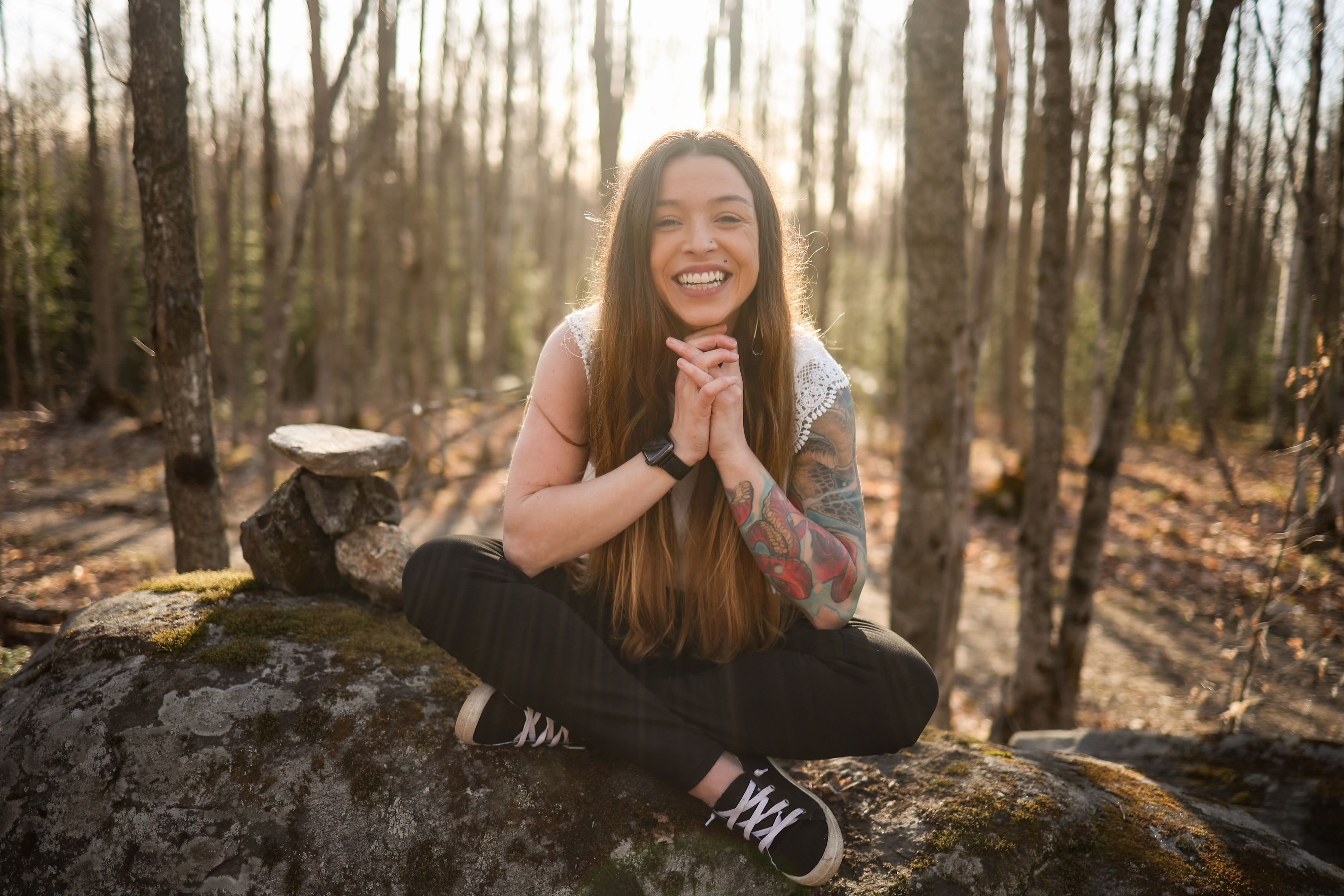
I offer a gentle, relational space for adults to explore difficult emotions, life transitions, and life after trauma.
A practice rooted in relationship
Braiding Healing Medicine is grounded in the belief that healing is not about fixing what is broken. It is about making room for every part of your experience with care, curiosity, and respect.
My approach is informed by a Métis understanding of interconnectedness: the mind, body, emotions, and spirit each hold wisdom, and each deserves to be included in the healing process.
Honouring your story
I meet you as the expert in your own life. Together, we can create a path that honours your identity, values, relationships, and the pace that feels right for you.
Healing happens in relationship — with ourselves, with others, and with the world around us.
There is space here for complexity, tenderness, and every emotion that arrives.
Your goals guide our work, and you remain in control of your therapeutic process.
The name behind the practice
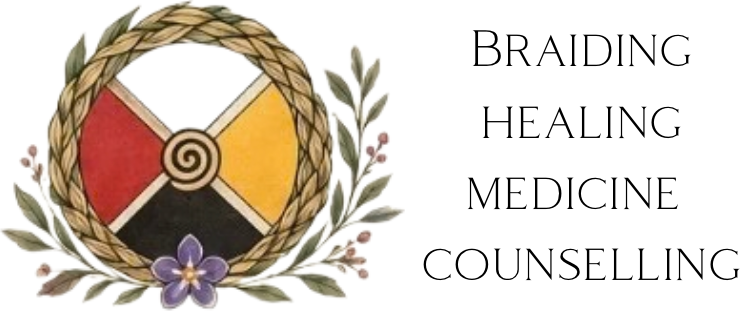
The name reflects the heart of this work. Braiding Healing Medicine draws together medicine wheel teachings and biopsychosocial frameworks to address wholistic health — paying careful attention to the mental, physical, emotional, and spiritual aspects of wellness and healing, and braiding those threads into the counselling space.
In many Indigenous traditions, the medicine wheel offers a map of wholeness — four directions, four aspects of the self, each essential and interconnected. In Western psychology, the biopsychosocial model recognises that our wellbeing is shaped by the interplay of biological, psychological, and social forces. This practice holds both frameworks with respect, weaving them together rather than choosing between them.
Braiding is an act of care and intention. It brings separate strands into relationship with one another — each strand distinct, each one necessary to the whole. That is what wholistic healing looks like here: not one approach applied to one part of you, but a thoughtful, responsive weaving of mind, body, emotion, and spirit into the counselling space.
Commitment to Indigenous-Centred Practice
As a Métis counsellor, my commitment to Indigenous-centred practice is ongoing and relational — not a box to check. This means actively working alongside other Indigenous practitioners, Elders, and knowledge keepers, and remaining accountable to the communities I am part of and serve.
I am a member of the Indigenous Circle Chapter of the Canadian Counselling and Psychotherapy Association (CCPA) — a community of Indigenous and allied counsellors dedicated to advancing Indigenous perspectives within the profession, supporting Indigenous-led research, and creating space for counsellors to learn from one another across nations and traditions.
My practice is shaped by a commitment to the ongoing work of indigenizing and decolonizing therapeutic approaches — questioning whose knowledge is centred, whose ways of healing are honoured, and how Western frameworks can be held alongside, rather than above, Indigenous understandings of wellness, land, and relationship.
This includes supporting and amplifying Indigenous-led research and practices, engaging in continued learning and dialogue, and showing up with humility in spaces where that work is being done collectively. Healing does not happen in isolation — and neither does this commitment.
Training & credentials
My training brings together psychotherapy, trauma-responsive care, Indigenous cultural competency, music cognition, movement, and mindfulness.
Master of Arts in Counselling Psychology
Registered Psychotherapist (Qualifying)
Bachelor of Music in Music Cognition
Canadian Reiki Association – Registered Practitioner
Registered Yoga Teacher
Royal Conservatory of Music Certified Teacher — voice, piano, music theory, harmony, counterpoint, composition, analysis, and pedagogy
Certified Clinical Trauma Professional (Level 1) — Evergreen Certifications
Indigenous Cultural Competency Training — York University Glendon Academy & Nokiiwin Tribal Council
Therapeutic philosophy
Therapy can be a place to slow down, listen inward, and build a more compassionate relationship with yourself. I draw from trauma-informed, somatic, narrative, mindfulness-based approaches, Dialectical Behavioural Therapy, and others, tailoring our work to your needs rather than asking you to fit a formula.
A complimentary consultation is a simple place to begin.